PHAROS AI Factory


for Medical Imaging & Healthcare


(PHAROS-AIF-MIH)

in conjunction with the IEEE Computer Vision and Pattern Recognition Conference (CVPR), 2026

08:00 - 13:00, June 3, Denver Colorado

About PHAROS-AIF-MIH

The PHAROS-AIF-MIH Workshop and Competition is a premier forum on transparent, secure and human-centered use of AI in medical imaging and healthcare. Building on PHAROS AI Factory and its healthcare vertical, the workshop brings together researchers and practitioners working on CT, MRI, X-ray, EHR and multimodal biomedical data, with particular emphasis on trustworthy, privacy-preserving and regulation-aware AI. It highlights recent advances in generative AI, multimodal LLMs, VLMs, knowledge distillation, agentic AI, continual learning, uncertainty estimation, drift monitoring, fairness and explainability for healthcare applications. The programme promotes interdisciplinary exchange across AI, computer vision, medical imaging, data science and clinical innovation, while supporting the broader goal of translating advanced AI methods into robust and deployable healthcare solutions. The programme includes keynote talks from leading experts, technical paper presentations and a competition focusing on two important challenges: Multi-Source COVID-19 Detection and Fair Disease Diagnosis. Built on real-world multi-source datasets and fairness-aware evaluation protocols, these challenges emphasize robust generalization across hospitals and equitable performance across demographic groups. Overall, PHAROS-AIF-MIH reflects the growing importance of transparent, secure and high-performance AI systems for medical decision support, while fostering benchmarking, collaboration and innovation across the medical imaging and healthcare community in Europe and beyond for impact.

The PHAROS-AIF-MIH Workshop is the sixth in the AI-MIA series of Workshops held at ICCV 2025 and CVPR 2024 and IEEE ICASSP 2023, ECCV 2022 and ICCV 2021 Conferences.

For any requests or enquiries regarding the Workshop, please contact: stefanos@cs.ntua.gr.
Organisers


General Chair


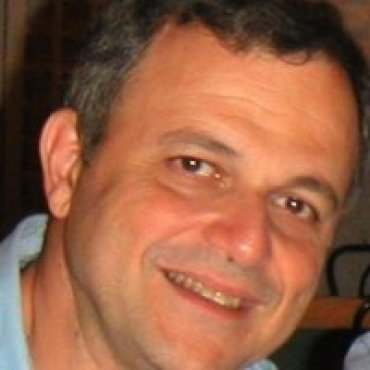
Stefanos Kollias

National Technical University of Athens & GRNET, Greece stefanos@cs.ntua.gr


Program Chairs


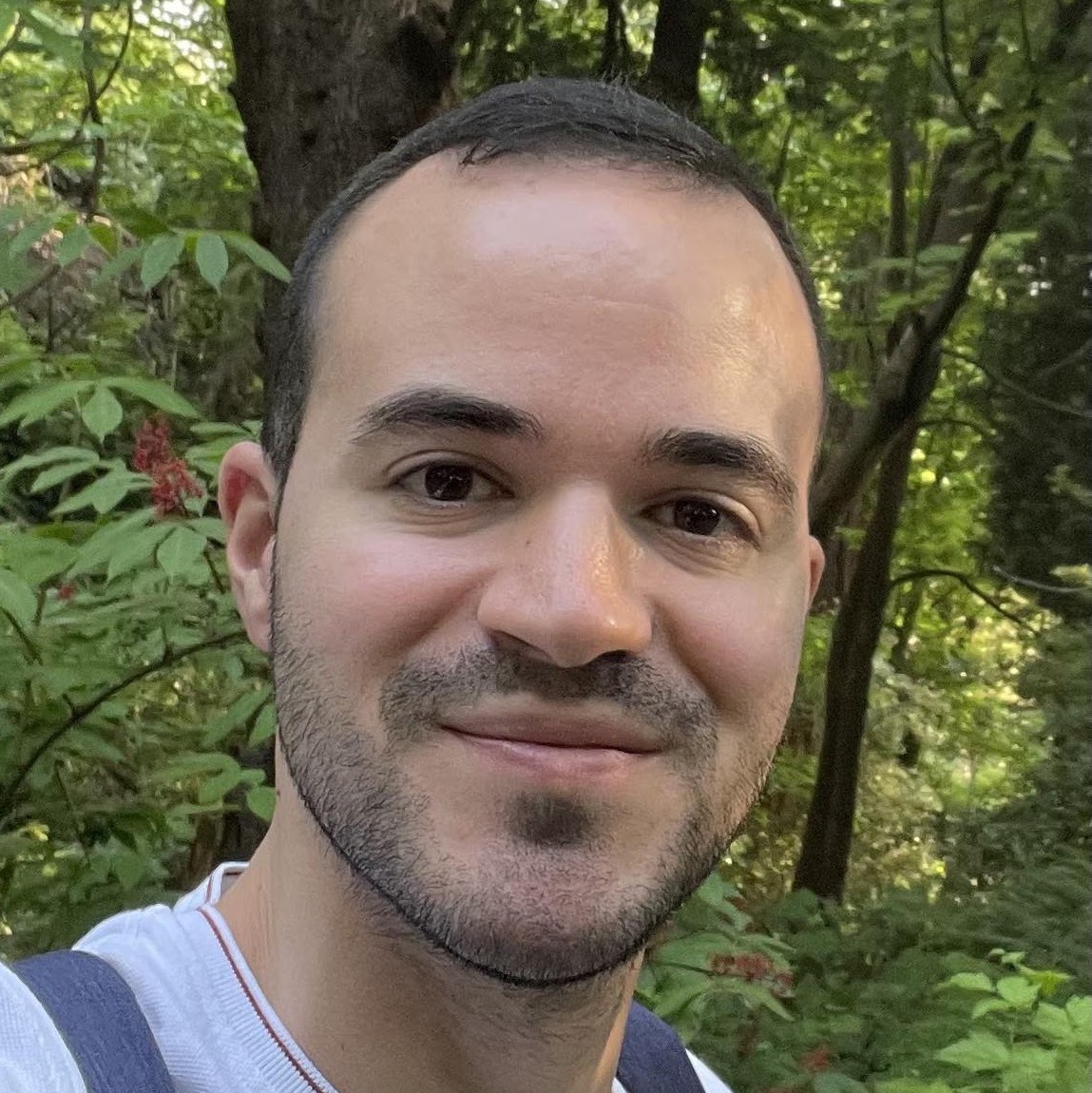
Dimitrios Kollias

Queen Mary University of London, UK d.kollias@qmul.ac.uk

Xujiong Ye

University of Exeter, UK X.Ye2@exeter.ac.uk

Francesco Rundo

University of Catania, Italy francesco.rundo@unict.it

        Data Chairs

                    Anastasios Arsenos,                 National and Kapodistrian University of Athens
                    Paraskevi Theofilou,                 National Technical University of Athens
                    Manos Seferis,                           National Technical University of Athens

The Workshop


Call for Papers

Original high-quality contributions (in terms of databases, surveys, studies, foundation models, techniques and methodologies) are solicited on -but are not limited to- the following topics and technologies:

    predictive modeling and deep learning models for medical imaging

    transparent, human-centered integration of GenAI (e.g., LLMs, VLMs) in health services

    creating trust among citizens on the use of responsible AI for healthcare

    efficient and friendly use of services, respect of privacy - taking into consideration the AI Act and Data Act

    learning methods to leverage knowledge from well-explored domains - gain insight in low data availability cases - enhance prediction accuracy for underrepresented health conditions

    AutoML, allowing automated selection of hyperparameters, feature engineering

    AI models on multimodal data (e.g. imaging, sequencing, medical records, open datasets)

    domain-specific AI models (e.g. in breast cancer, Alzheimer’s disease)

    AI prediction models for disease progression (e.g., survival ML for Electronic Health Records)

    segmentation, classification, fair & explainable medical decision making

    interpretable and actionable insights into AI-driven decisions

    integration of uncertainty quantification mechanisms (e.g., prediction intervals, variance heatmaps) - Bayesian methods, Monte Carlo dropout, ensemble modeling

    drift monitoring and out-of-distribution detection, continual learning and model transportability - domain adaptation for timely model updates and refinements

    Agentic AI for medical imaging & healthcare

    High Performance Computing and AI for healthcare


Workshop Important Dates (Updated)


Paper Submission Deadline:                                                             23:59:59 AoE (Anywhere on Earth) March 21, 2026

Review decisions sent to authors; Notification of acceptance:       April 6, 2026

Camera ready version:                                                                       April 10, 2026


Submission Information

The paper format should adhere to the paper submission guidelines for main CVPR 2026 proceedings style. Please have a look at the Submission Guidelines Section here.

We welcome full long paper submissions (between 5 and 8 pages, excluding references or supplementary materials). All submissions must be anonymous and conform to the CVPR 2026 standards for double-blind review.

All papers should be submitted using this CMT website*.

All accepted manuscripts will be part of CVPR 2026 conference proceedings.


The Microsoft CMT service was used for managing the peer-reviewing process for this conference. This service was provided for free by Microsoft and they bore all expenses, including costs for Azure cloud services as well as for software development and support.

The Workshop's Agenda


TIME PRESENTATION TITLE
08.00 - 08.15 Organisers Introduction – Start of Workshop
08.15 - 08.25 Oral Presentation ‘PHAROS-AIF-MIH: Transparent and Secure Use of AI in Medical Imaging and Healthcare’ (ID 11)
08.30 - 09.00 Invited Speech Anastasia Chatzidimitriou, Director & Pantelis Natsiavas, Head of eHealth Lab, Institute of Applied Biosciences, INAB | CERTH, Greece
‘Identifying real-world patterns for patient journeys using real-world clinical data in OMOP-CDM format - Challenges and opportunities’
09.00 - 10.00 Oral Presentations ‘ProtoMedAgent: Multimodal Clinical Interpretability via Privacy-Aware Agentic Workflows’ (ID 66)
‘Cross-Modal Knowledge Distillation for PET-Free Amyloid-Beta Detection from MRI’ (ID 16)
‘Learning What To Ask For When: Ordering for In-Context Interactive Medical Image Segmentation’ (ID 44)
‘Anatomy-Guided Connection for 3D Medical Images’ (ID 27)
‘CrossStream-Seg: A Cross-Guided Two-Stream Learning for Boundary-Sensitive ROI Segmentation’ (ID 54)
10.05 - 11.05 Oral Presentations ‘Continual Learning in 3D Vision: Mitigating Catastrophic Forgetting & Domain Shift via Deep Latent Adapters and Covariate-Guided Fusion’ (ID 51)
‘Genetically-influenced multi-scale brain organization via self-supervised learning’ (ID 34)
‘Longitudinal Medical Visual Question Answering Guided by Vision Foundation Models for Consistent Attention’ (ID 20)
‘Scaling In-Context Segmentation with Hierarchical Supervision’ (ID 67)
‘Can We Go Beyond Visual Features? Neural Tissue Relation Modeling for Relational Graph Analysis in Non-Melanoma Skin Histology’ (ID 25)
11.05 - 11.25 Oral Presentations ‘Vision-Language Model Based Multi-Expert Fusion for CT Image Classification’ (ID 50)
‘Towards Fair and Robust Volumetric CT Classification via KL-Regularised Group Distributionally Robust Optimisation’ (ID 59)
11.25 - 11.30 Organisers Conclusions
11.30 - 13.00 Poster Session 'IonMorphNet: Generalizable Learning of Ion Image Morphologies for Peak Picking in Mass Spectrometry Imaging' (ID 8)
'A Robust Spatial-Temporal Multitask Deep Learning Pipeline to Predict CT Perfusion Parameters' (ID 21)
'EntroMix: Clinically-Aware Self-Paced Generative Augmentation for Imbalanced Medical Image Classification' (ID 23)
'Machine Learning-Based Localization of Point Sources in Photon Scattering Medical Imaging' (ID 24)
'Anomaly-Driven Prompting for Label-Free Skin Lesion Segmentation Using Foundation Models' (ID 26)
'Phase-map synthesis from magnitude-only MR images using conditional score-based diffusion models with application in training of accelerated MRI reconstruction models' (ID 29)
'Temporal M-Protein Trajectory Phenotyping and Progression Risk Prediction in Monoclonal Gammopathies via Multivariate Longitudinal Machine Learning' (ID 30)
'Hierarchical Uncertainty-Aware Deep Simplex Classification for Open-Set Medical Image Recognition' (ID 31)
'Extending ZACH-ViT to Robust Medical Imaging: Corruption and Adversarial Stress Testing in Low-Data Regimes' (ID 32)
'Unpaired-to-Paired Data Synthesis: Learning to Model Disease Effects via Contrastive Analysis of Neuroimaging-derived Features' (ID 33)
'Do XAI Metrics Agree in Digital Pathology? A Cross-Dataset Study of Explainer Evaluation in Clinically Relevant Histology Models' (ID 35)
'Medical Vision–Language Models for Robust Disease Diagnosis' (ID 37)
'Halfway to 3D: Ensembling 2.5D and 3D Models for Robust COVID-19 CT Diagnosis' (ID 41)
'T-Gated Adapter: A Lightweight Temporal Adapter for Vision-Language Medical Segmentation' (ID 43)
'SAM for Robust Mitochondria Instance Segmentation in Fluorescence Microscopy' (ID 45)
'ARAN: Leveraging Foundation Models for Vasculature-Tree-Informed ARtery-Aware Intracranial ANeurysm Detection in 3D CTA and ToF-MRA' (ID 46)
'Few-Shot Learning based Multimodal Skin Lesion Classification' (ID 47)
'FAM-Match: Fractal-Aligned Manifold Matching with Adaptive Routing Framework for Semi-Supervised Medical Image Classification' (ID 48)
'Clinically-Constrained Vision Transformers for Cross-Hospital Domain Generalization in Chest X-Ray Diagnosis' (ID 49)
'Parameter Efficient Fine-tuning for Domain-specific Gastrointestinal Disease Recognition' (ID 52)
'A Heterogeneous Ensemble for Multi-Center COVID-19 Classification from Chest CT Scans' (ID 53)
'One-Shot Medical Image Segmentation via Error-driven Spatial Weighting Boosting' (ID 55)
'Debiasing Ultrasound Video Learning via Motion-Aware State-Space Modeling' (ID 56)
'Clinical Priors Guided Lung Disease Detection in 3D CT Scans' (ID 57)
'Few-Shot Joint Segmentation and Classification of Lung Nodules in CT with Self-Supervised Correlation Transformers' (ID 58)
'Physics-Grounded Interpretable Semi-Supervised Medical Image Segmentation via Annotation-Free Structure Tensor Regularization' (ID 60)
'Machine Learning enabled Breast Cancer Multidisciplinary Team Treatment Planner' (ID 61)
'OPBNet: Oscillatory Phase-Binding Networks for Interpretable Zero-Shot Medical Visual Reasoning Without Pretraining' (ID 62)
'Are Natural-Domain Foundation Models Effective for Accelerated Cardiac MRI Reconstruction?' (ID 63)
'A comparison study between a machine learning model for breast cancer detection in ultrasound images and a manifold based classification of breast cancerous forms' (ID 64)
'A Human-in-the-Loop Framework for Efficient Prompt Selection in Microscopy Vision–Language Models' (ID 65)
'Geometry-Aware Coreset Selection and Perceptual-Constrained Adversarial Attacks for Efficient and Robust Medical Imaging' (ID 68)
'Act Like a Pathologist: Tissue-Aware Whole Slide Image Reasoning' (accepted CVPR paper)

Keynote Speakers: Dr. Anastasia Chatzidimitriou & Dr. Pantelis Natsiavas


Title: Identifying real-world patterns for patient journeys using real-world clinical data in OMOP-CDM format - Challenges and opportunities


Biographies

Dr. Anastasia Chatzidimitriou, Research Director at ΙΝΑΒ, is since June 2024 Director of INAB. She studied Biology at the Aristotle University of Thessaloniki (AUTH) and holds a PhD in Immunogenetics (2006). She is the Head Biomedical Sector of the INAB and the Founder and Head of the Unit of Molecular Diagnostics. She is responsible for the biobank at INAB, a node within BBMRI-ERIC. Since 2016 she is responsible for the management of Real World Evidence and the Accreditation of diagnostics tests in the lymphomas working group of the European Hematology Association. Currently, she supervises 5 PhD students and 4 MsC students. Her research activities focus on the field of immunobiology of lymphoid malignancies, precision medicine and molecular diagnostics.

Dr. Pantelis Natsiavas is a Researcher (Grade B) at the Institute of Applied Biosciences of the Centre for Research and Technology Hellas (INAB|CERTH), where he heads the eHealth Lab. At the same time, he is a Collaborating Researcher of the Laboratoire d'Informatique Médicale et d'Ingénierie des Connaissances en eSanté - LIMICS (Paris, France). He holds a PhD from the Sorbonne University (Paris, France) and has received two Master's Degrees as well as a Diploma in Electrical Engineering and Computer Engineering from the Aristotle University of Thessaloniki (Thessaloniki, Greece). He has been awarded a scholarship by the French Government while he has also collaborated with companies both in Greece and abroad, providing software development and consulting services for more than 10 years. Since 2013, he has participated in a number of European and national research and development projects in the field of Medical Informatics regarding the use of real-world data, telemedicine systems, data security in the field of health, drug safety and pharmacovigilance etc. His research activities focus on the use of Symbolic Artificial Intelligence and Knowledge Engineering approaches (development and use of ontologies and knowledge graphs). At the same time, he has been responsible on behalf of INAB|CERTH in a number of research projects funded either by industry, or through European and national funding schemes.


The Competition


The PHAROS-AIF-MIH Workshop includes a Competition which is split into two Challenges: (i) Multi-Source Covid-19 Detection Challenge; (ii) Fair Disease Diagnosis Challenge.


How to participate

In order to participate, teams will have to register. There is a maximum number of 8 participants in each team. You should follow the below procedure for registration.

The lead researcher should send an email from their official address (no personal emails will be accepted) to d.kollias@qmul.ac.uk with:

      i) subject "PHAROS-AIF-MIH Competition: Team Registration";

      ii) this EULA filled in, signed and attached;

      iii) the lead researcher's official academic/industrial website; the lead researcher cannot be a student (UG/PG/Ph.D.);

      iv) the emails of each team member, each one in a separate line in the body of the email;

      v) the team's name;

      vi) the point of contact name and email address (which member of the team will be the main point of contact for future communications, data access etc)

As a reply, you will receive access to the dataset's images and annotations.


Competition Contact Information

For any queries you may have regarding the Challenges, please contact d.kollias@qmul.ac.uk.


General Information

At the end of the Challenges, each team will have to send us:

      i) their predictions on the test set,

      ii) a link to a Github repository where their solution/source code will be stored,

      iii) a link to an ArXiv paper with 2-8 pages describing their proposed methodology, data used and results.

After that, the winner of each Challenge, along with a leaderboard, will be announced.

There will be one winner per Challenge. The top-3 performing teams of each Challenge will have to contribute paper(s) describing their approach, methodology and results to our Workshop; the accepted papers will be part of the CVPR 2026 proceedings. All other teams are also able to submit paper(s) describing their solutions and final results; the accepted papers will be part of the CVPR 2026 proceedings.

The Competition's white paper (describing the Competition, the data, the baselines and results) will be ready at a later stage and will be distributed to the participating teams.


General Rules

1) Participants can contribute to any of the 2 Challenges.

2) In order to take part in any Challenge, participants will have to register as described above.

4) The winner and the two runner-ups in each Challenge will be asked to also share their trained models so as to check out the validity of the approach.


Competition Important Dates (Updated)


Call for participation announced, team registration begins, data available:           January 30, 2026

Test set release:                                                                                                               March 9, 2026

Final submission deadline (Predictions, Code and ArXiv paper):                               23:59:59 AoE (Anywhere on Earth) March 15, 2026

Winners Announcement:                                                                                                 March 17, 2026

Final Paper Submission Deadline:                                                                                 23:59:59 AoE (Anywhere on Earth) March 21, 2026

Review decisions sent to authors; Notification of acceptance:                                   April 6, 2026

Camera ready version:                                                                                                   April 10, 2026

Multi-Source Covid-19 Detection Challenge

Description

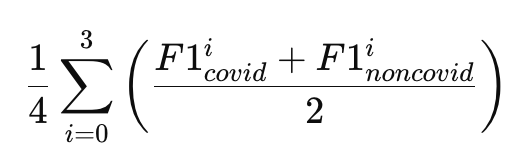
CT scans have been collected from four distinct hospitals and medical centers. Each scan has been manually annotated to indicate whether it belongs to the Covid-19 or non-Covid-19 category. The dataset is divided into training, validation, and test subsets. Participants will receive the CT scans along with the source identifier for each scan, represented by an ID number from 0 to 3. Competing teams are required to develop AI, machine learning, or deep learning models for Covid-19 classification. Model performance will be evaluated on the test set, which also contains CT scans collected from the same four distinct hospitals and medical centers. Model performance will be based on the average macro F1 score achieved across all four sources (hospitals and medical centers), ensuring fair and robust assessment across diverse data distributions.

Rules

The participating teams will be able to use any publicly available datasets as long as they report it in their submitted final paper.

Performance Assessment

The performance measure (P) is the average macro F1 score achieved across all four sources:

GRNET


Fair Disease Diagnosis Challenge

Description

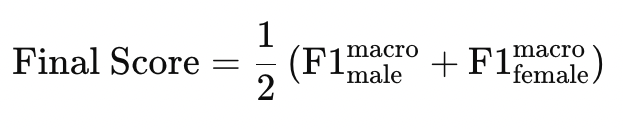
The dataset consists of chest CT scans of lung cancer, Covid-19 and healthy subjects. Each scan has been annotated to indicate whether it belongs to a healthy subject or a subject diagnosed with Adenocarcinoma, or with Squamous Cell Carcinoma, or with Covid-19. Each scan contains information on whether the subject is male or female. The dataset is divided into training, validation, and test subsets. Participants will receive the CT scans along with the male/female subject information. Competing teams are required to develop AI, machine learning, or deep learning models for fair disease diagnosis. Model performance will be evaluated on the test set and will be based on the average of per-gender macro F1-scores.

Rules

Participating teams may use any publicly available pre-trained models, provided these models have not been specifically pre-trained to classify between healthy individuals and those diagnosed with Adenocarcinoma, Squamous Cell Carcinoma, or Covid-19. However, all model fine-tuning and methodological development must be conducted exclusively using the dataset provided for the competition.

Performance Assessment

The performance measure (P) is the average of per-gender macro F1-scores. To calculate this, at first one needs to split the set by gender (Subset A: all male samples; Subset B: all female samples) and then compute the macro F1 on each. Therefore, the Final Score is:

GRNET


Winners & Leaderboard

Multi-Source Covid-19 Detection Challenge

The winner of this Challenge is team FDVTS. The runner-up is team HySonLab. In the third place is team Scotty.


Fair Disease Diagnosis Challenge

The winner of this Challenge is team Scotty. The runner-up is team FDVTS. In the third place is team HySonLab.


The leaderboard for the two Challenges with the teams that scored higher than the baseline and made valid submissions are shown below:

Leaderboard

Congratulations to all teams, winning and non-winning ones! Thank you very much for participating in our Competition.

References (Updated)


    If you use the data from the Multi-Source Covid-19 Detection Challenge, you must cite the following paper:

    D. Kollias, et. al.: “Domain adaptation, Explainability & Fairness in AI for Medical Image Analysis: Diagnosis of COVID-19 based on 3-D Chest CT-scans“, CVPR 2024

    @inproceedings{kollias2024domain,title={Domain adaptation explainability \& fairness in ai for medical image analysis: Diagnosis of covid-19 based on 3-d chest ct-scans},author={Kollias, Dimitrios and Arsenos, Anastasios and Kollias, Stefanos},booktitle={Proceedings of the IEEE/CVF Conference on Computer Vision and Pattern Recognition},pages={4907--4914},year={2024}}


If you use the data from the Fair Disease Diagnosis Challenge, you must cite the following paper:

    D. Kollias, et. al.: “Pharos-afe-aimi: Multi-source \& fair disease diagnosis“, ICCV 2025

    @inproceedings{kollias2025pharos, title={Pharos-afe-aimi: Multi-source \& fair disease diagnosis}, author={Kollias, Dimitrios and Arsenos, Anastasios and Kollias, Stefanos}, booktitle={Proceedings of the IEEE/CVF International Conference on Computer Vision}, pages={7265--7273}, year={2025} }

    Sponsors


    The PHAROS-AIF-MIH Workshop has been generously supported by:

      GRNET – National Infrastructures for Research and Technology

      GRNET

      Queen Mary University of London

      QMUL

      Digital Environment Research Institute

      DERI

      Institute of Communication and Computer Systems

      ICCS